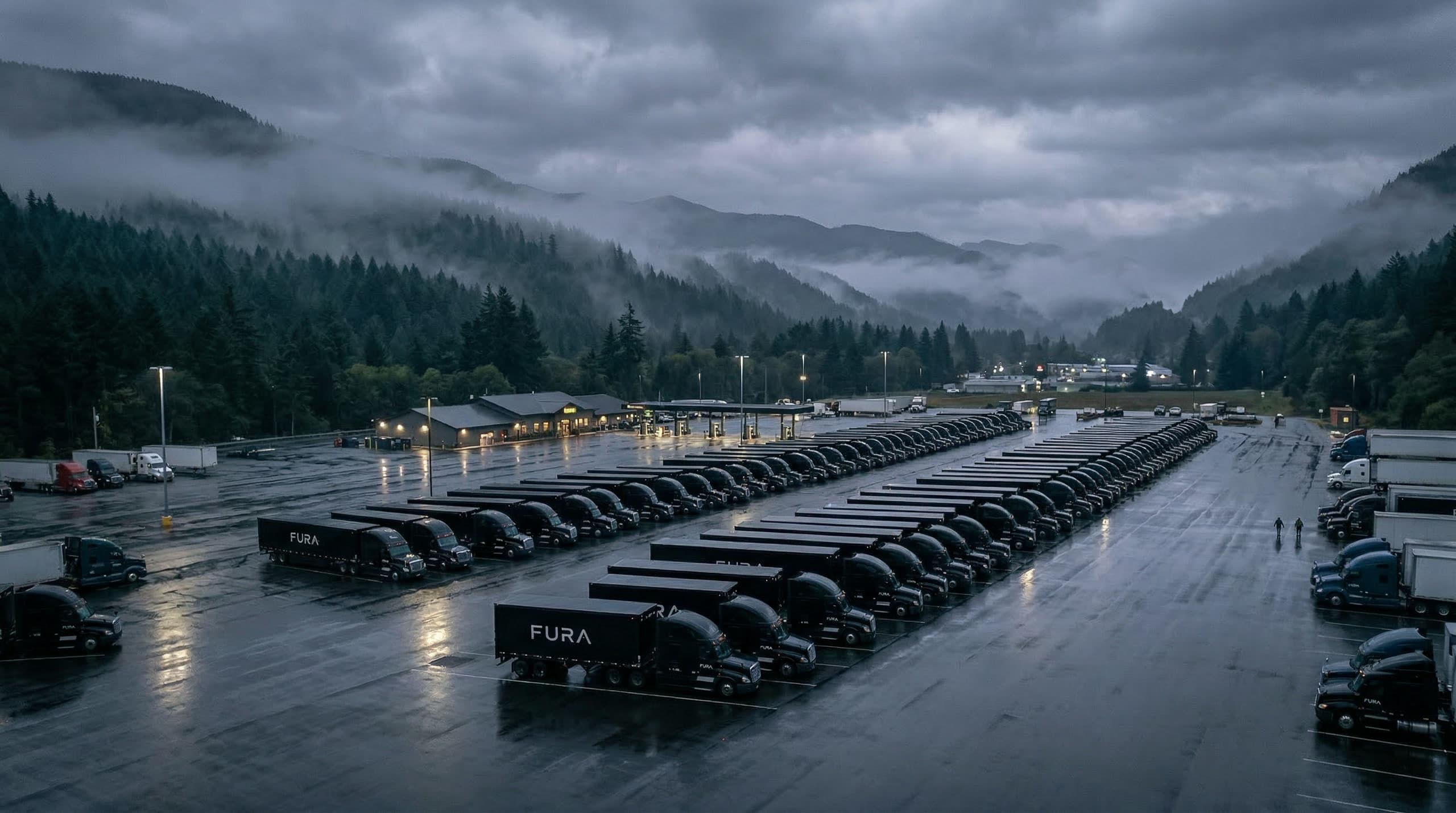
The full Fura Freight case study lives at ten8.ai/case-study/fura. This post pulls out the operational details for anyone evaluating what an AI Coworker deployment actually looks like inside a working mid-market brokerage.
The starting point
Fura Freight is a fast-growing roll-up brokerage. 550+ customers. 16,000 carriers. Over 5,000 shipments a month across dry van, reefer, and flatbed. As Fura scaled through acquisitions, they hit the ceiling every mid-market brokerage hits: operators could only handle so much in a day. The next 10 hires would not have moved margin — they would have spread the same routine work thinner.
Specific symptoms before Ten8:
- Only 60% of inbound carrier calls were answered. The other 40% went to voicemail.
- Average response time on the phone was about 3 minutes.
- Operators spent most of their day on routine carrier interactions — MC verification, load detail confirmation, status updates — instead of brokering.
- No load-level visibility into where margin was being left on the table.
What Ten8 deployed
Three AI Coworkers, running across the channels Fura already used. No new TMS, no new portal for the team to learn.
1. AI-driven inbound voice and email
Voice picks up 100% of inbound carrier calls, 24/7. It identifies the carrier (MC), pulls up the load they are calling about, communicates the load details, runs MC verification, and negotiates rates inside the floor and ceiling Fura sets per lane. Edge cases escalate to an operator with a context summary.
2. Automated load board posting and carrier outreach
When a load goes ready in the TMS, Ten8 posts to the relevant load boards, ranks Fura's network for the lane, and initiates outbound — email and voice in parallel. What used to be a 15-minute manual setup happens in seconds.
3. A teammate inside Microsoft Teams
The biggest workflow change for the team. Operators message Ten8 directly inside Teams to check MC numbers, find carriers near a pickup, update load details, or post booking confirmations to the general channel. No context-switching between five tools.
The numbers
Pulled directly from the case study:
| Metric | Before Ten8 | With Ten8 | Improvement |
|---|---|---|---|
| Carrier calls answered | 60% | 100% | +67% |
| Average response time | 3 minutes | 3 seconds | −98% |
| Margin in a specific case A human moved the load at $620, Ten8 did it for $70 less | 13% | 23% | +77% |
| Theft/fraud cases caught in one month | — | 3 | +3 saves |
A note on the margin number: it is one documented case where a human operator moved a load at $620 and Ten8 closed the same lane $70 cheaper. It is not a portfolio average, and we are deliberate about not generalizing it. The point is that the AI does not get tired, never accepts the first offer just to be done with the call, and runs the same playbook on every negotiation.
Ten8 cross-checks dispatcher names, email domains, banking changes, and rate posture against historical norms. Three confirmed double-brokering attempts surfaced in the first month — the system looks at signals an operator handling 50 active threads cannot watch at the same time.
What did not change
Operators still own the strategic carrier relationships. They still set the rate parameters Ten8 negotiates inside. They still handle detention disputes, customer escalations, and the loads that require judgment. Ten8 augments the team; it does not replace it.
Fura also kept its TMS, its load boards, and its compliance person. Ten8 runs on top of the stack the team already used. That is the deployment pattern that worked here and the one most mid-market brokers should plan for.
Why this matters for any brokerage hitting a ceiling
Three takeaways for an owner reading this:
Forty percent of inbound calls going to voicemail is not just a customer service problem. It is loads you never quoted, capacity you never logged, and carriers who learned to call someone else first.
Routine work is the bottleneck, not load volume. Fura was not short of freight. They were short of operator hours that were not already spent on check calls, MC checks, and confirmations.
SOP-first beats rip-and-replace. Ten8 went live in two weeks because it learned how Fura already worked, instead of asking Fura to change how they worked. That is the part that gets understated in AI pitches and is the difference between a deployment that compounds and one that sits in a pilot folder.
Watch the testimonial
Jeff Dangelo, CEO at Fura, on what changed in his own words: watch the testimonial. The case study page has it embedded if you prefer that: ten8.ai/case-study/fura.
If you are running a mid-size brokerage with 10 to 100 operators and your team is hitting the same kind of ceiling Fura did, book a demo. Two-week onboarding. First results inside a month. Outcome-based pricing — you pay per result, not per seat.
Keep reading

Carrier identity fraud: the broker's defense playbook
Cargo theft losses hit $725M in 2025, up 60% from 2024. This playbook covers the 5 carrier-fraud patterns behind it and the checks that catch each one.
How AI handles every inbound carrier call 24/7
Inbound carrier calls drop volume on the floor every night and weekend at most brokerages. Here's how an AI picks up every call, handles the routine ones end-to-end, and routes the rest.

Carrier fraud is getting worse. Here's how we catch it
Double brokering, identity theft, and ghost carriers cost the freight industry billions. Automated vetting catches patterns humans miss.