
Aljex has been around since 1983. It's one of the oldest brokerage TMS platforms still in active use, and many of its customers have been running it for 15 to 25 years. Ten8 is an AI-native broker that didn't exist three years ago. The two products are usually not on the same shortlist, but increasingly they are, because brokerages running Aljex are starting to ask whether their TMS can take them through the next decade.
This article is a fair, factual comparison. We're not going to pretend Aljex is bad software, because it isn't. We're going to explain what each product is built to do and where they diverge.
What Aljex is
Aljex is a brokerage TMS. Its core job is record-keeping and workflow. Loads in, loads out, documents managed, invoices generated, carriers tracked, accounting reconciled. Aljex does this well and has done it reliably for decades.
The product evolved with the industry. It added load board integrations, EDI support, carrier portals, and reporting. In recent years it added some AI features, mostly around document parsing and carrier matching suggestions. The fundamental architecture, though, is a system of record. The work happens when a human rep clicks something.
Aljex pricing is typically per-user per-month, in the $200 to $400 range depending on tier and feature set. A 30-rep brokerage running Aljex pays roughly $80,000 to $130,000 per year for the platform.
What Ten8 is
Ten8 is an AI freight platform. Its core job is execution. Carrier sourcing, outbound calls, rate negotiation, booking, check calls, exception handling. The AI does the work. The human supervises and handles exceptions.
Ten8 doesn't replace the system of record. It sits on top of it. We integrate with Aljex (and McLeod, Tai, Turvo, Revenova, MercuryGate, and others) and run the operational layer while the TMS continues to do what it does well.
Ten8 pricing is outcome-based — you pay per result the AI delivers. No platform fee, no per-seat, no per-minute, no upfront cost. Result definitions are workflow-specific and locked in during onboarding.
Where they overlap
Both products manage loads. Both can store carrier information. Both can generate rate confirmations and invoices.
The overlap is shallow. Aljex stores the load and provides the workflow. Ten8 actually moves the load through the workflow without a human clicking. They're complementary on most deployments. Brokerages don't have to pick. They can keep Aljex as their system of record and add Ten8 as the execution layer.
Where they diverge
The architectural difference shows up in three places.
Carrier outreach
Aljex helps your rep make outreach faster. Email templates, click-to-call from carrier records, integration with DAT for posting and searching. The rep is still the one doing the work.
Ten8 does the outreach itself. It dials the top 12 carriers in parallel, holds real conversations, negotiates rates, books loads. Same task, different actor. The operator sees a notification when the load is covered.
For a brokerage where the bottleneck is rep throughput on outbound communication, this is the biggest single difference. A rep on Aljex can comfortably handle 8 to 12 loads per day. A rep on Aljex plus Ten8 oversees 40 to 60.
Negotiation
Aljex doesn't negotiate. It records the rate the rep negotiated. The negotiation happens on the rep's phone or email.
Ten8 holds multi-turn negotiations on voice and email. The carrier counters, Ten8 counters back, the conversation closes within parameters set by the brokerage. Discipline is consistent across loads because the same model runs every negotiation.
After-hours coverage
Aljex doesn't sleep, but the reps who use it do. After hours, the brokerage has minimal coverage unless someone is on a night shift.
Ten8 runs 24/7. Inbound carrier calls at 11 PM get picked up. Customer quote requests at 5 AM Eastern get answered. Coverage time on after-hours work is the same as during business hours.
When Aljex is the right choice
Aljex makes sense when:
- The brokerage values continuity. If you've run Aljex for 15 years and your team knows it cold, ripping it out is expensive and risky. Layer Ten8 on top instead.
- The brokerage is small and operationally focused. A 5-rep specialty brokerage with stable volume and high-touch customer relationships gets less leverage from AI execution. Aljex alone may be enough.
- Volume is shrinking. If your strategic posture is to harvest existing accounts and run lean, you don't need execution scaling.
In any of these cases, Aljex's reliability and the operator team's familiarity with it are real assets.
When Ten8 is the right addition
Ten8 makes sense when:
- The brokerage is growing volume. Hiring more reps to keep up is the alternative, and the math on AI vs hiring favors AI.
- Coverage time is a competitive issue. Your customers are giving freight to faster-responding brokerages.
- Margin discipline is inconsistent across the rep team. The AI runs the same playbook every time.
- After-hours and weekend volume is real. Inbound carriers, urgent quote requests, exception handling that currently waits until Monday.
The deployment model is layered. Aljex stays. Ten8 runs the execution.
Side-by-side feature comparison
| Capability | Aljex | Ten8 |
|---|---|---|
| Load entry and lifecycle tracking | Native | Reads/writes via integration |
| Document management | Native | Generates and pushes back |
| Accounting and invoicing | Native | Not in scope |
| Carrier database | Native | Reads/scores carriers |
| EDI support | Native | Not in scope |
| Outbound carrier calling | Click-to-call (human) | Autonomous voice AI |
| Rate negotiation | Recorded, not executed | Multi-turn voice and email |
| Autonomous booking | No | Yes (70-90% on routine freight) |
| Check calls | Manual or scheduled | Automated, ELD-integrated |
| 24/7 inbound coverage | No | Yes |
| Exception handling | Human-driven | AI-handled with handoff |
| Custom integrations | Available | Available |
How brokerages run them together
Ten8 connects to Aljex via API. We map the load lifecycle, the carrier records, and the document templates, and pull historical load data to train the carrier scoring model on the brokerage's specific freight. The AI runs in shadow mode on one or two lanes before any production traffic. Then it goes live one lane at a time. Volume in Aljex flows through Ten8 for execution while the rep team's work shifts toward exceptions, customer accounts, and strategic work.
What changes for the brokerage
A few things to expect during and after deployment.
Workload redistribution
The reps who used to spend 70 percent of their day on outbound and inbound carrier communication start spending 70 percent of their day on customer relationships, exceptions, and lane strategy. Inbound carrier calls — capacity inquiries, load follow-ups, payment status — get handled by Ten8 24/7 alongside the outbound work. The work is the same number of hours but different content.
Margin shift
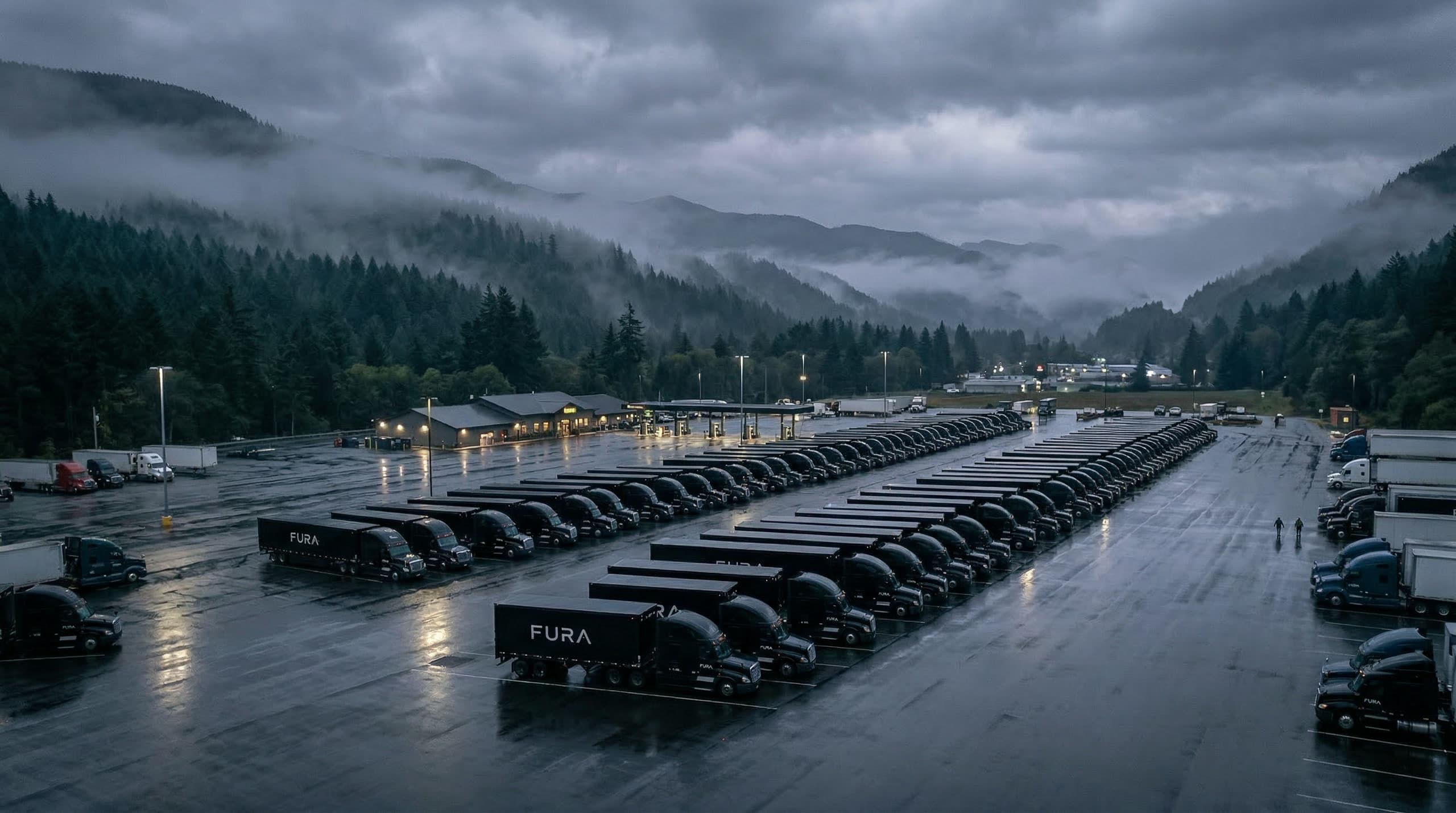
The cleanest production reference: Fura Freight (running Ten8 across voice, email, and Teams) saw inbound calls answered go from 60% to 100%, response time go from 3 minutes to 3 seconds, and one documented load run a 13%→23% margin lift where Ten8 covered the same lane $70 cheaper than the human-run case. Full case study at ten8.ai/case-study/fura. The drivers in production are consistent negotiation discipline and reduced revenue leakage on accessorials and detention.
Coverage time
Coverage time on routine spot freight drops from a typical 22 minutes to under 8 minutes. The AI starts the carrier outreach the moment the load enters Aljex.
Rep throughput
Loads handled per rep per day increases from 8 to 14 (Aljex alone) to 40 to 60 (Aljex plus Ten8 in oversight model).
What you can't expect
A few things Ten8 doesn't do, even when paired with Aljex:
- Replace your accounting workflow. Aljex still handles invoicing and reconciliation.
- Replace your customer relationships. The top accounts still need a human rep owning them.
- Eliminate exceptions. Roughly 10 to 20 percent of loads still need a human in the loop.
- Run your business strategy. Lane expansion, customer acquisition, hiring decisions are still yours.
Cost comparison at scale
A 30-operator brokerage doing 6,000 loads per month.
Aljex alone
Aljex licenses: ~$108,000 annually. Operators to handle 6,000 loads/month at ~10 loads per operator per day: 30. Operator cost loaded: ~$2.7 million annually. Total: ~$2.8 million.
Aljex plus Ten8
Aljex licenses (held flat): ~$108,000 annually. Ten8 cost: outcome-based, scales with delivered results. Operators required if AI absorbs the routine path on existing volume: closer to 20, with the remaining headcount focused on exceptions, strategic accounts, and growth. Operator cost loaded: ~$1.8 million.
The delta on the human-side cost is the cleanest number to plan against. The Ten8 line on top is bounded by what the AI actually delivers — if it does not pull its weight, you do not pay. The savings come from holding operator count flat and absorbing growth through the AI rather than through additional hiring.
Where this goes
We expect most brokerages running Aljex in 2026 to add an AI execution layer in the next 24 months. The math is too good to ignore. The Aljex-only brokerages will be at a meaningful cost and coverage disadvantage by 2028.
That doesn't mean Aljex disappears. It means Aljex becomes one piece of a stack rather than the whole stack. The system of record stays. The execution moves to AI.
If you run Aljex and want to see what an integration plus AI execution layer looks like on your freight, book a demo. Integration with your Aljex tenant takes about two weeks, then shadow mode on one lane for two weeks before anything goes live.
Keep reading

Ten8 vs Revenova: full comparison for growing brokerages
Revenova is a Salesforce-native TMS used by mid-market brokerages. Ten8 is an AI freight platform that runs the operational layer. Here's how they compare on architecture, throughput, and growth fit.
Ten8 vs Tai TMS: which platform covers loads faster
Tai TMS bills itself as a modern, automation-focused brokerage platform. Ten8 is an AI-native broker that runs the execution layer. Here's a head-to-head on coverage time, throughput, and where each fits.

Top 5 AI-first broker platforms for 2026
AI freight platforms moved from pitch to production in 2025. Here are the five worth a brokerage owner's time in 2026, and where each one fits.